
Mythomorpho
Mythomorpho is a theatrical show about Greek myths by Compagnia dei Folli, set in a post-apocalyptic society searching for a new beginning.
In a world that has already faced its own collapse, what remains of humanity moves among the ruins, attempting to rebuild a community through the rediscovery of ancient Greek myths. These are not stories belonging to a distant past, but living archetypes capable of helping us understand existence, fear, diversity, knowledge and our need to belong to a community.
In a landscape suspended between memory and rebirth, archetypal figures emerge as guides for a fragile civilisation.
- The forbidden fire of knowledge, stolen by Prometheus, becomes a symbol of the human need to take risks in order to learn and evolve.
- Pandora is reinterpreted through the lens of stigma: the figure of a woman historically cast as a bringer of misfortune becomes an opportunity to question how guilt and prejudice are constructed.
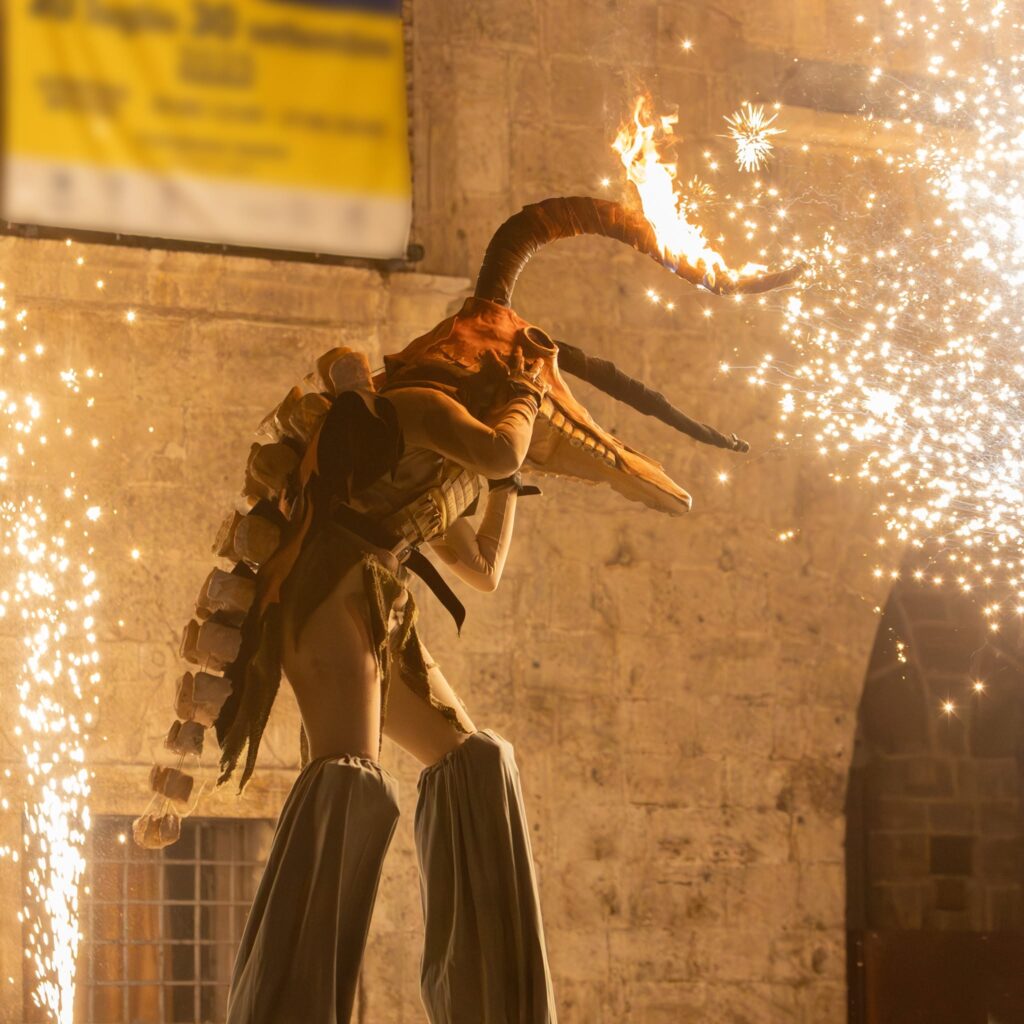
- The Minotaur embodies the fear of the other: the unknown, the hybrid, the different, the excluded. Its presence raises a question that runs throughout the performance: who decides what is monstrous, and who is condemned to bear that definition?
- Through Persephone, the performance finally explores the themes of loss and transformation, tracing a journey from trauma towards awareness, resilience and cyclical rebirth.
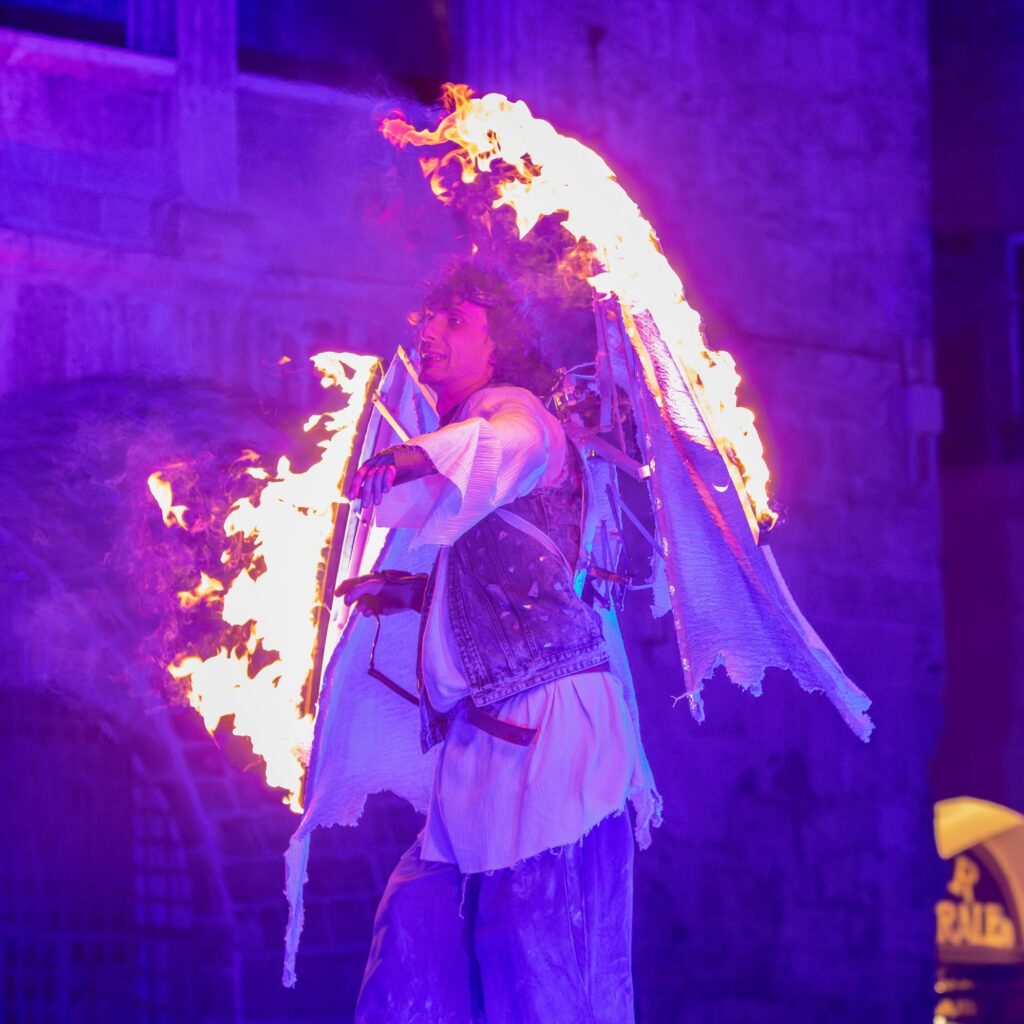
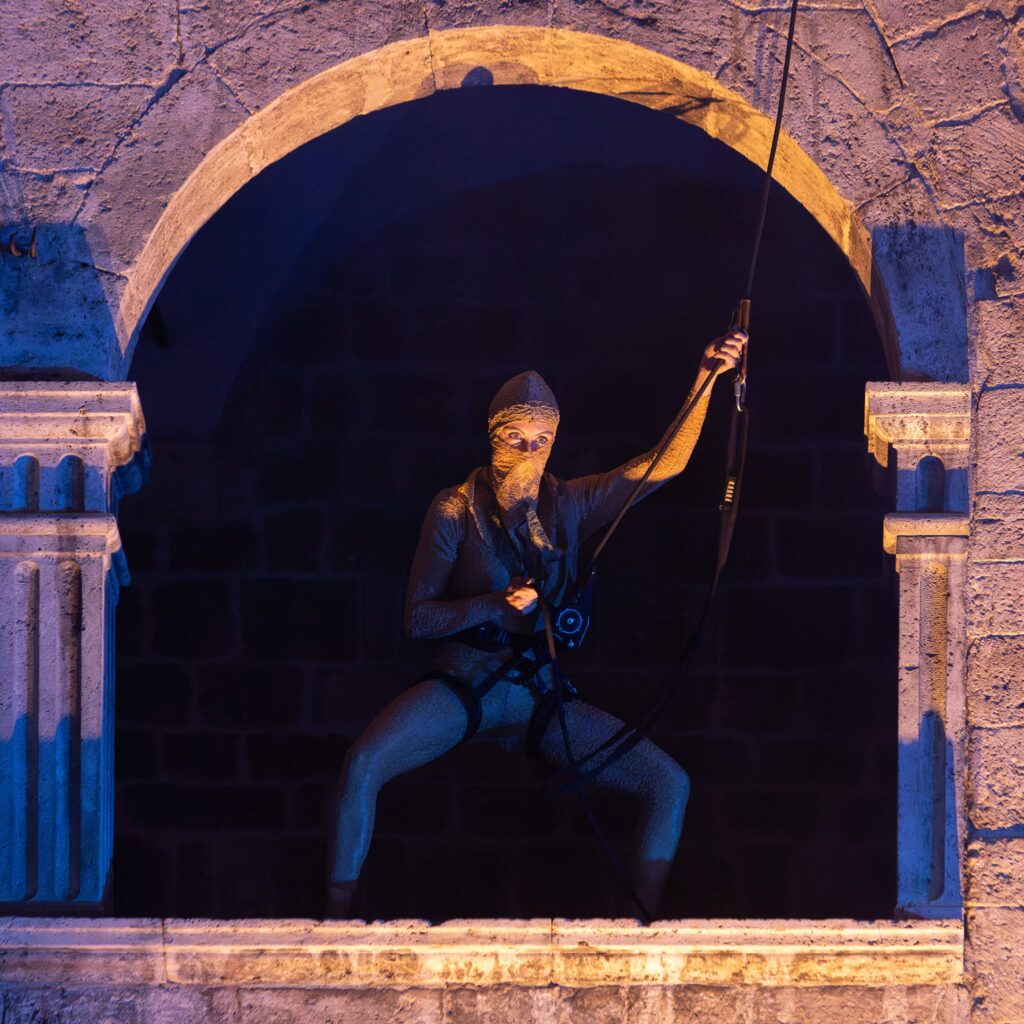
Mythomorpho builds its universe through a predominantly visual language in which physical theatre, stilts, vertical dance, exoskeleton masks, pyrotechnics and fire effects.
The performers’ bodies become symbols, and their transformations build a narrative made of images. Masks and large figures alter human proportions, stilts raise the characters and turn them into archetypal presences, while verticality carries the action from the earth towards the sky.
Fire simultaneously takes on the meaning of destruction, knowledge and rebirth. The scenic space thus becomes a threshold between past and future, a ritual place in which Greek mythology is no longer merely the memory of a distant civilisation, but a possible map for those who must invent a new world.
In a world that must begin again from scratch, Mythomorpho asks a question: if everything we know disappeared, which stories would we choose to carry with us to build the future?