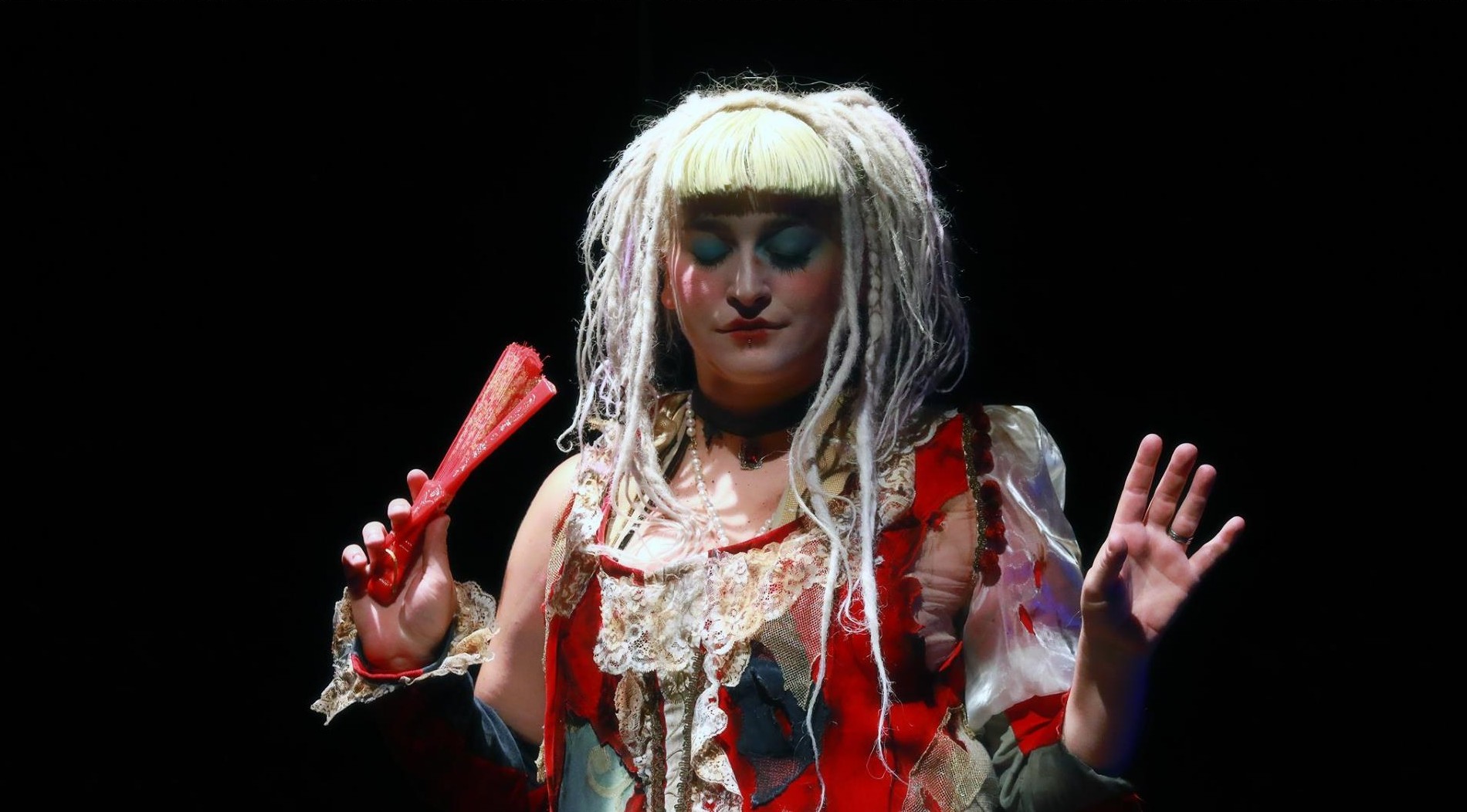
Passacaglia
Passacaglia, as well as being a Spanish folk dance fashionable at the court of Louis XIV, is a musical form based on continuous variation over a dominant note.
The name Passacaglia comes from Spanish and means “to pass along the calle”, or street, a term that reveals its popular origins among travelling musicians.
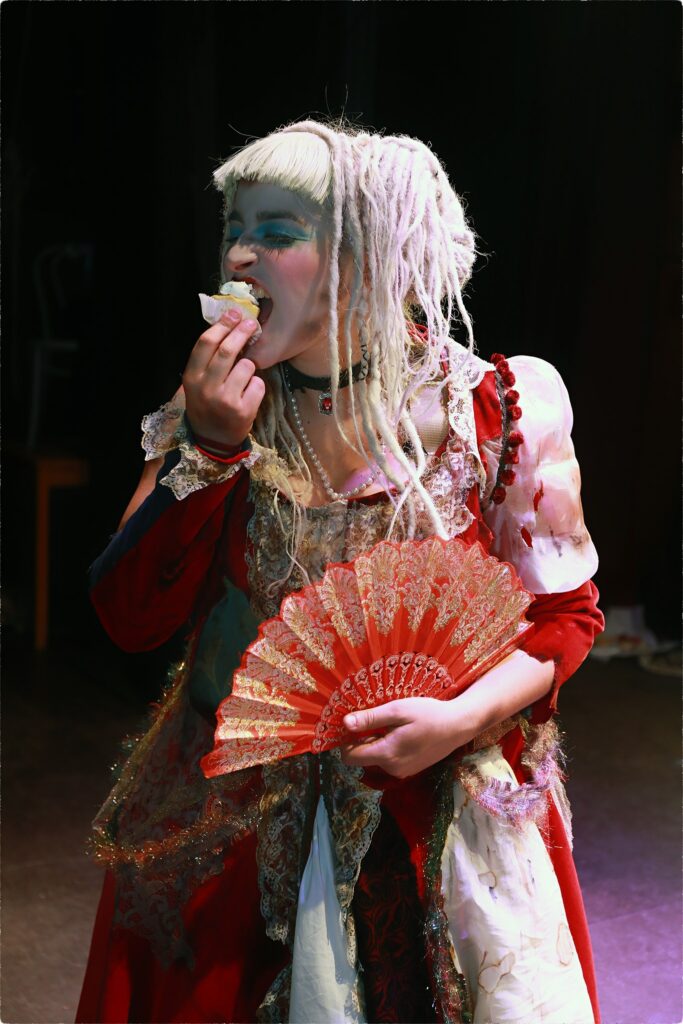
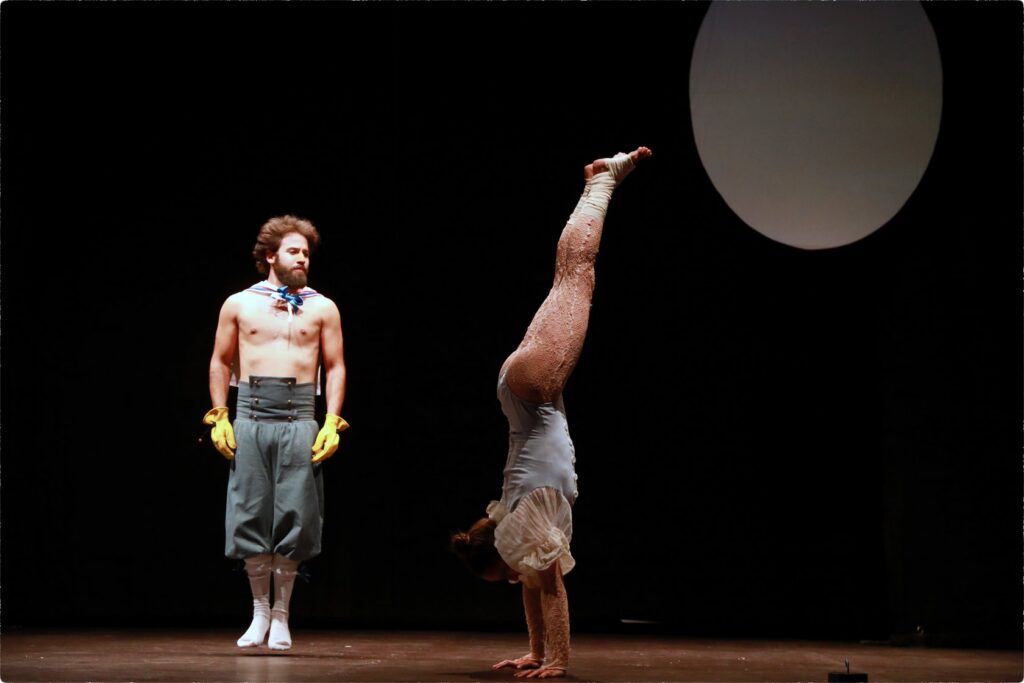
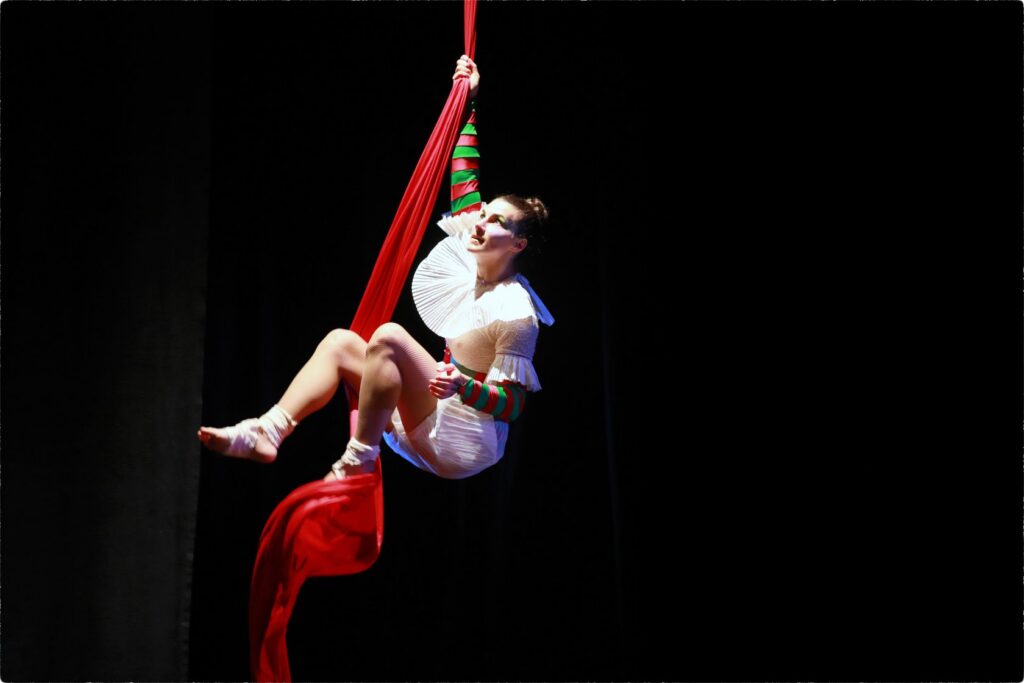
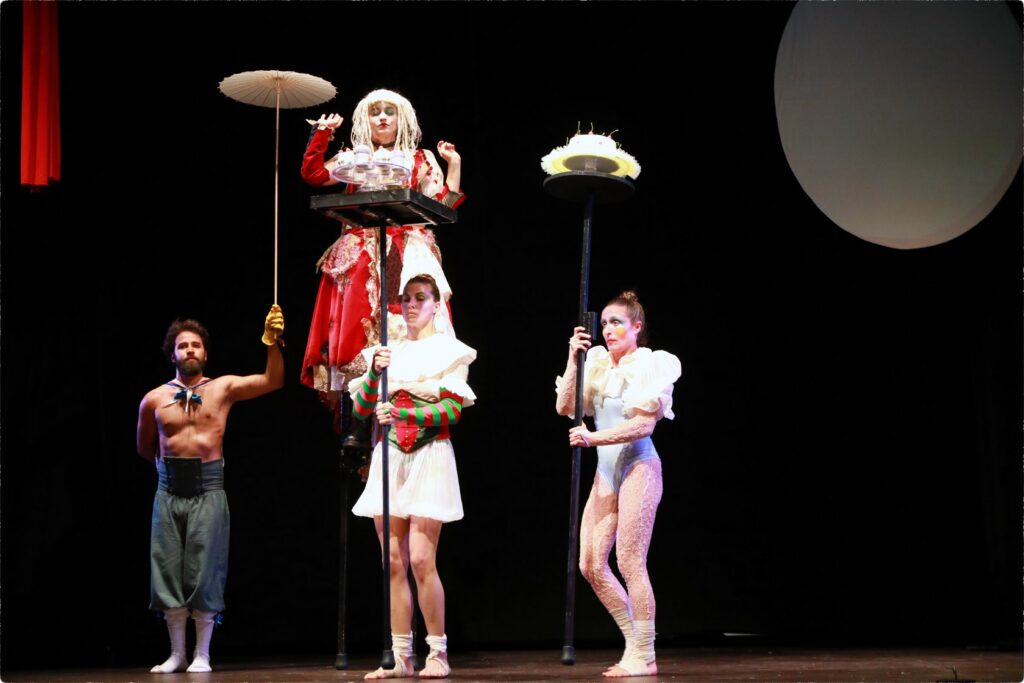
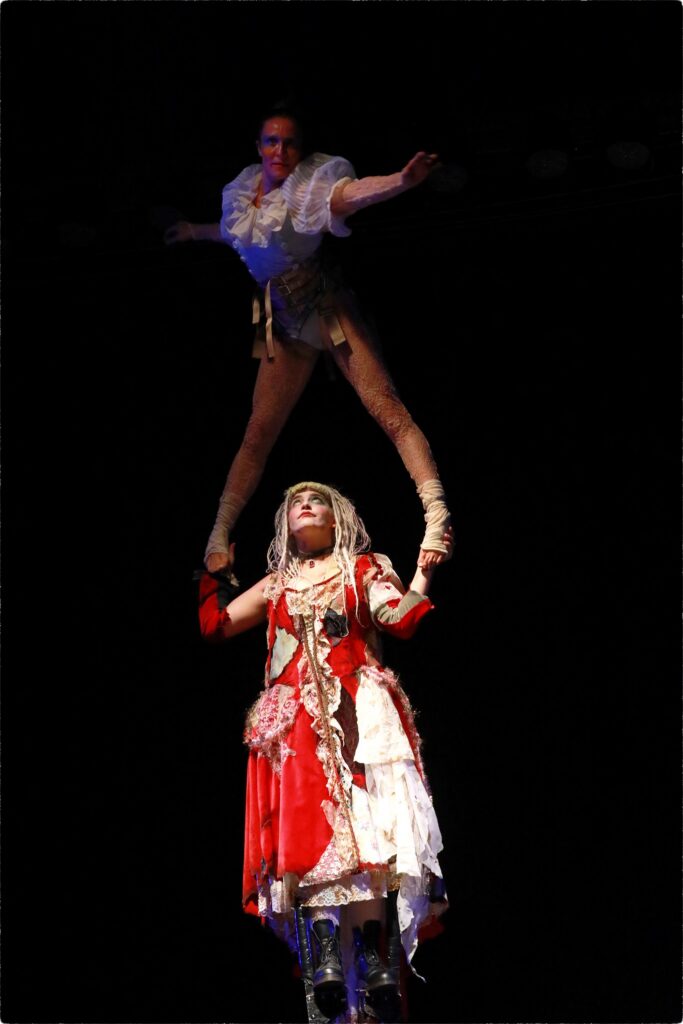
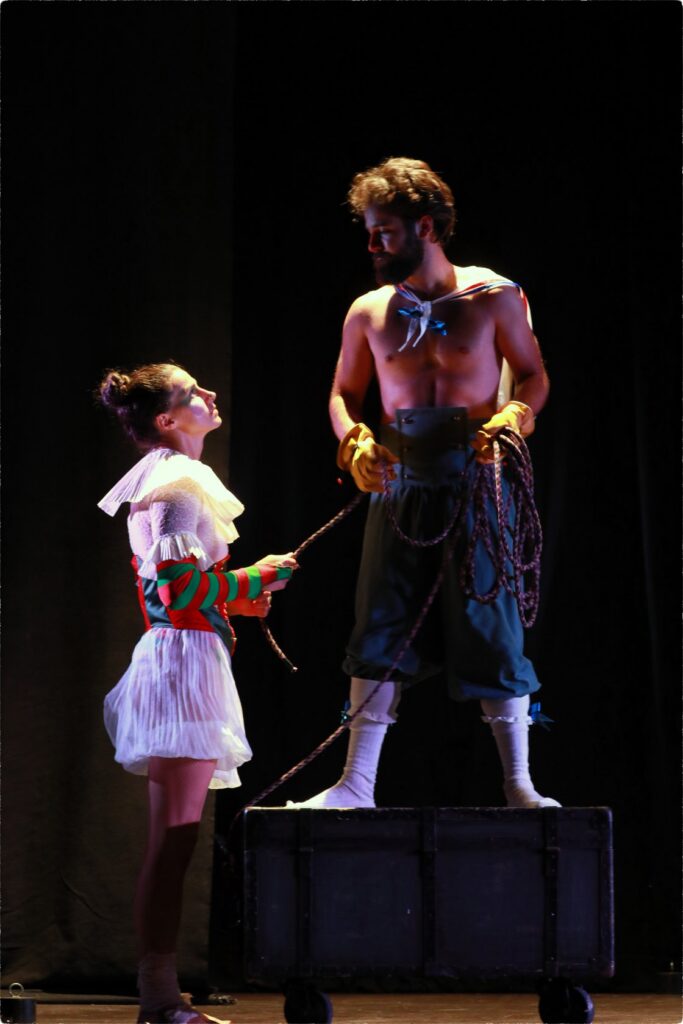
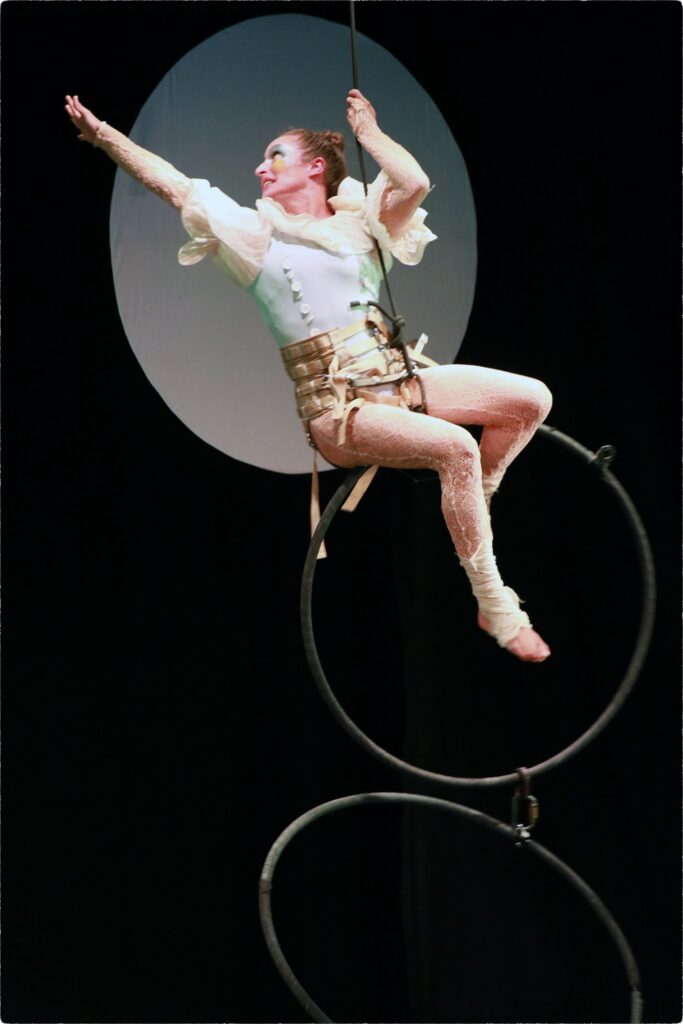
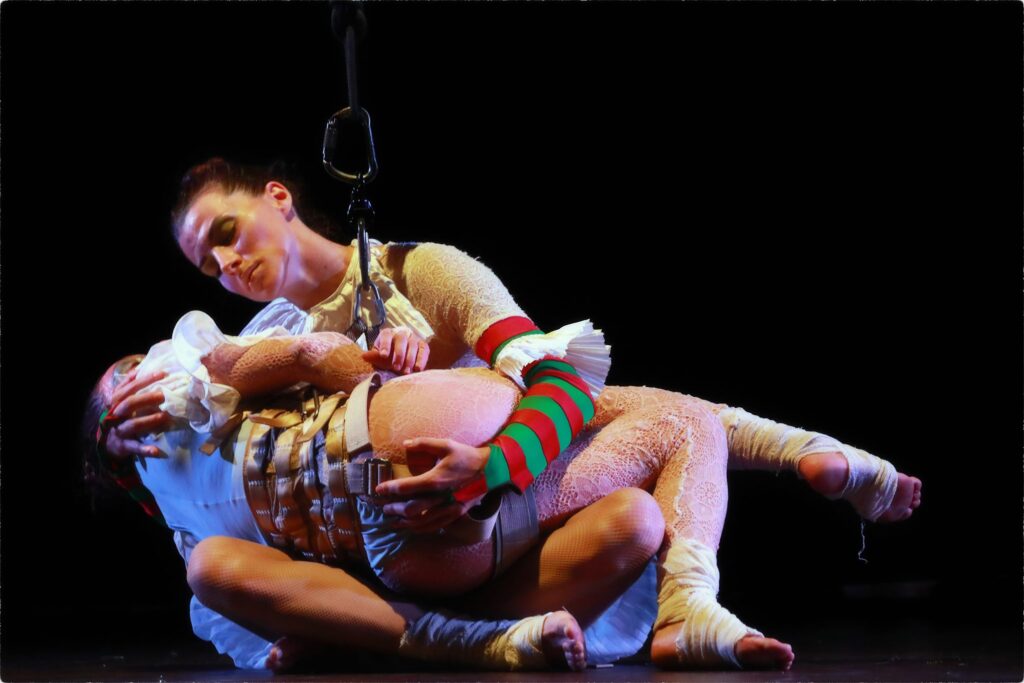
The performance is a fairy tale set in the nineteenth century. Its protagonist is a very powerful sovereign who exercises authority over her subjects. From high upon her throne, the Queen decides the course of her state, controls the time of her kingdom and imposes herself upon the lives of its inhabitants. To do so she uses a microphone placed high above, accessible only to her. The subjects in turn long to reach the microphone, without which they have no voice. From below, all the inhabitants devise countless ways to climb upwards, using circus skills and apparatus.
This performance was born as a reflection on freedom following the coronavirus lockdown that brought the entire world to a standstill.
Above all, it is an invitation to act and make responsible choices, because if freedom is like air, we only realise how precious it is when it begins to run out.
Directed by Davide Calvaresi