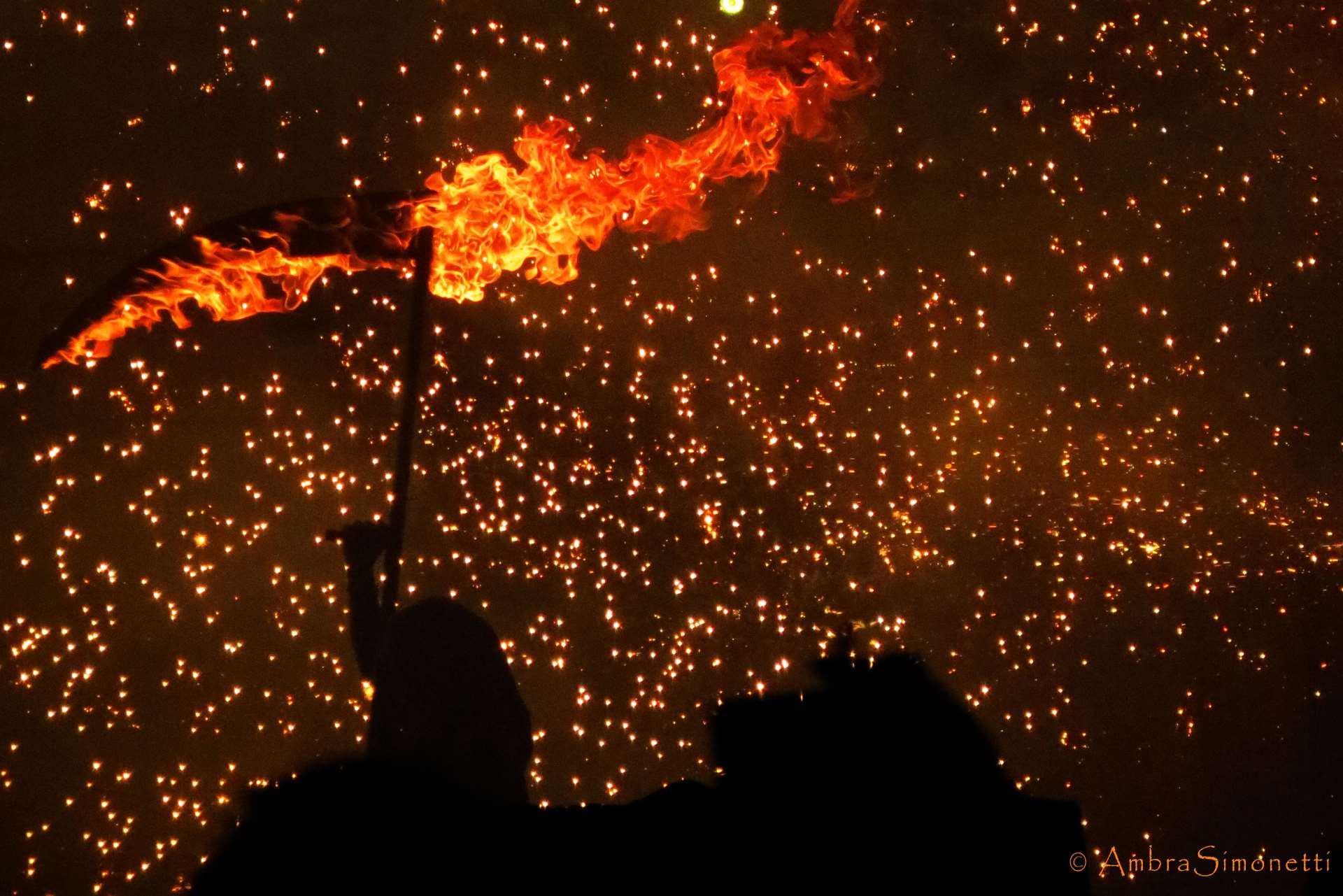
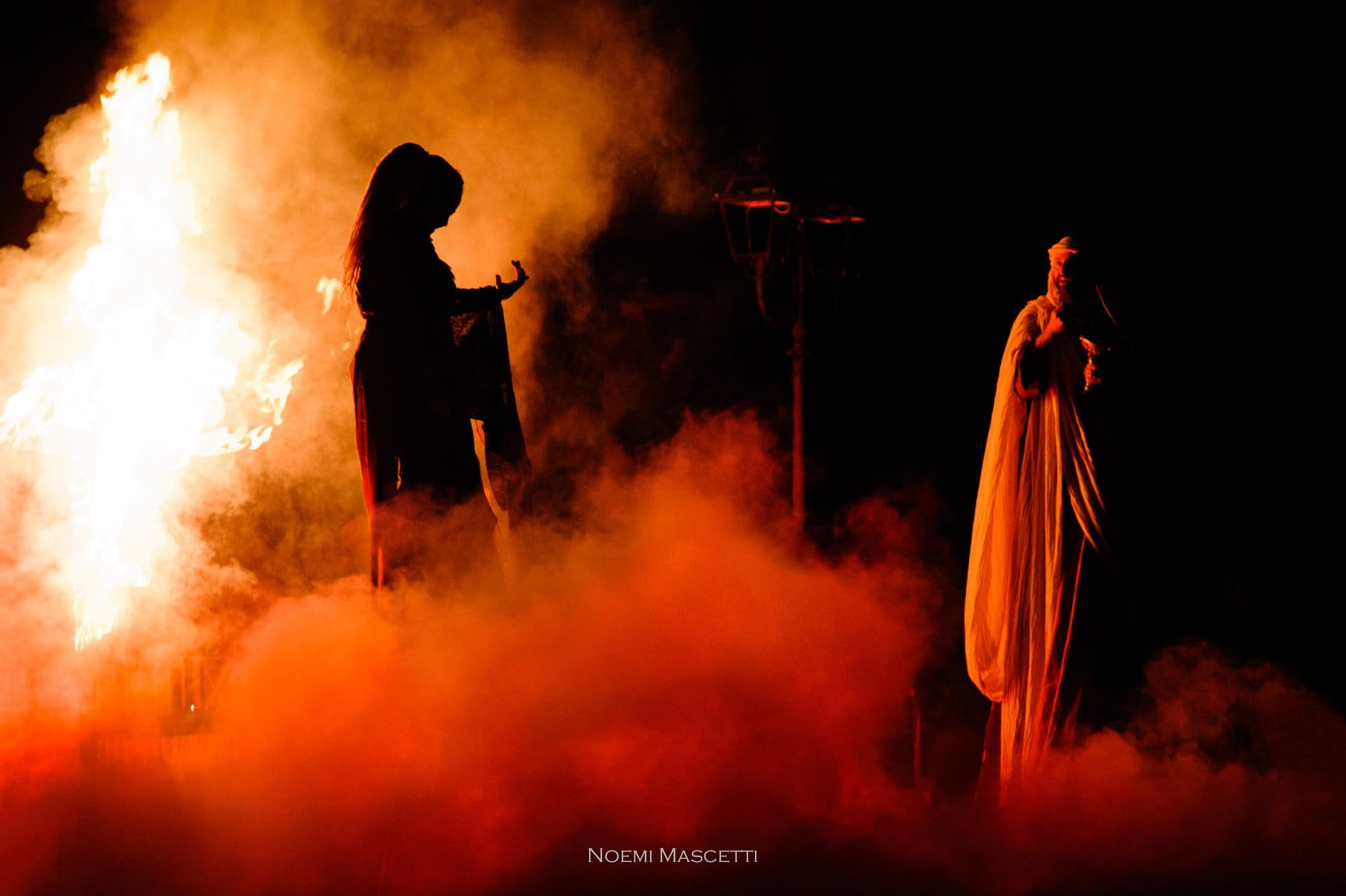
Fire has always held a special place in human history. It is not merely a chemical reaction, but a true universal symbol that has crossed the centuries, evolving from a tool for survival into the protagonist of rituals, myths and, eventually, spectacular fireworks displays.
On this journey, we will discover how fire has been worshipped, feared and used by humankind, until it became the pyrotechnic art we know today.
The dual nature of fire
Fire has always had two faces: on one side it destroys, on the other it regenerates. Cultures around the world have invested it with profound meanings. It has been seen as an element of purification and renewal: think of medieval bonfires or ritual fires marking a new beginning. In many traditions, sacred fire represents fertility and abundance, a symbol of life being reborn.

Always linked to deities and spirituality, fire has taken on the role of a bridge between humankind and the divine, with the sun, lightning and the eternal flame symbolising its power. It is also an element of transformation, capable of changing matter and marking the boundary between life and death.
Fire through history
From the earliest times to the present day, fire has accompanied humanity through its evolution.
In prehistoric times, its discovery represented an epoch-making turning point: from a simple source of heat to a means of protection and cooking food. In antiquity, fire took on a sacred value and was used in religious and magical rites, as in Ancient Egypt, where effigies were burned in esoteric ceremonies. In the Roman age it was used in expiatory rites such as the sacrifice of the Argei, wicker effigies cast into the Tiber.

In the Middle Ages, fire was central to beliefs in purification and regeneration, as accounts of miraculous forges attest. With the Renaissance, gunpowder revolutionised the use of fire, giving rise to the first pyrotechnic displays. In the modern and contemporary ages, fire lost some of its mysticism and became a spectacular element, a symbol of celebration and festivity.
Fireworks
The fireworks we admire today on festive nights have their roots in China, around the year 1000, with the discovery of gunpowder. From there they spread throughout the world, first through the Arabs and later through the studies of thinkers such as Roger Bacon and Biringuccio, who began to codify pyrotechnic techniques during the Renaissance. In the seventeenth and eighteenth centuries, European courts turned fireworks into a refined art, while in the nineteenth and twentieth centuries pyrotechnics became increasingly spectacular, leading to the cutting-edge technologies used today.

Every fireworks display is the result of careful chemical study. The colours that illuminate the sky depend on specific compounds: strontium produces red, calcium orange, sodium yellow, barium green, copper blue, and the combination of copper and strontium creates violet. Over time, chemical components have been improved to guarantee effects that are increasingly spectacular and safe.
Today fireworks are not merely explosions of colour, but genuine works of art. During the Renaissance, stage machines were used to enchant audiences, a concept that still survives in modern pyrotechnic shows. Special effects and the interplay of light, sound and movement create an immersive experience, while their expressive power can be used to convey symbolic messages and celebrate important events.
Fire has always accompanied us: it has warmed us, protected us, frightened us and fascinated us. From primordial element to spiritual symbol, from instrument of destruction to breathtaking spectacle, it has crossed our history leaving an indelible mark. Today, when we see a firework explode in the sky, we are not simply watching a show: we are celebrating a thousand-year bond between humankind and flame.