
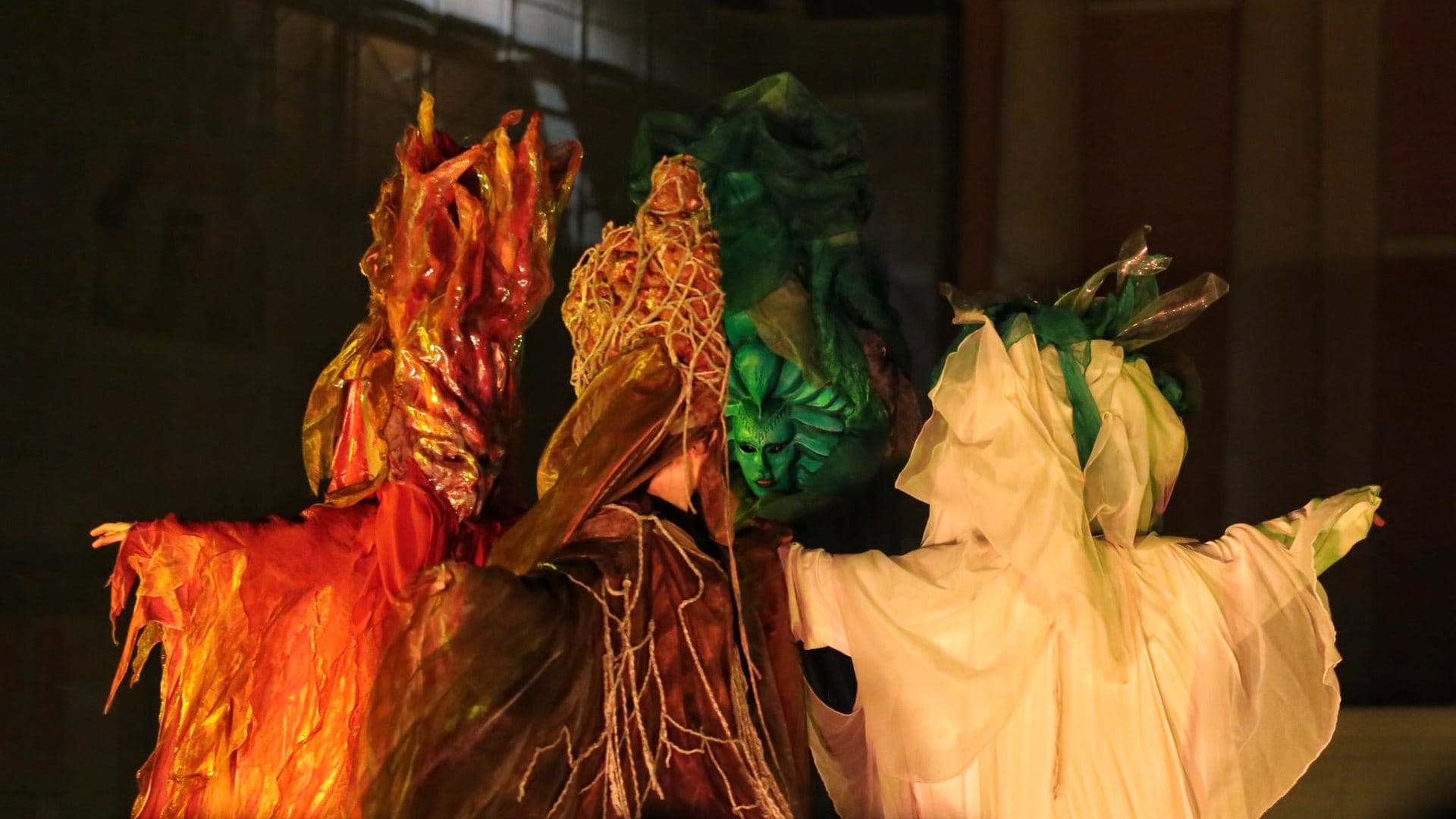
There was an ancient time, suspended between myth and philosophy, when the world was described through four primary forces: Earth, Water, Air and Fire. They were not simply natural elements, but living principles, archetypes capable of explaining the origin of things, the nature of human beings, the movement of the stars, and the mystery of transformation.
Since then, these four elements have never ceased to speak to the collective imagination. They have travelled through centuries of history, legends, art and performance, finally arriving – transformed yet still recognisable – in the language of street theatre and large-scale contemporary performances, such as those of the Compagnia dei Folli.
A Language as Ancient as the World
According to the Greek philosophical tradition, formulated by Empedocles in the 5th century BC, everything that exists is born from the combination of Earth, Water, Air and Fire. These elements are not engaged in random conflict, but dance together, separate and reunite, driven by opposing forces of attraction and conflict.
This vision is reflected in ancient myths:
- Earth is mother and guardian, fertile and dark, dwelling place of gods and the dead;
- Water is the origin of life and the abyss, memory and oblivion;
- Air is breath, divine wind, an invisible messenger;
- Fire is knowledge, destruction and rebirth.
Every legend, from Prometheus stealing fire from the gods to the nymphs of the springs, from spirits of the wind to chthonic deities, tells of the profound relationship between human beings and these primordial forces.
From Myth to Stage: The Renaissance and the Theatre of the Elements
During the Renaissance, when humankind returned to the centre of the universe, the four elements became performance. European courts transformed them into living allegories, staged through magnificent celebrations, ephemeral structures, theatrical machinery, fireworks, aerial dances and water displays.
The ruler is the one who masters the elements, bringing order to the chaos of the natural world through art.
Thus were born:
- naumachiae and theatrical fountains, where Water becomes the stage;
- flying machines and suspended dances, symbols of Air;
- artificial mountains, caves and rocky stage sets, embodiments of Earth;
- spectacular pyrotechnics, in which Fire erupts as a cosmic and political force.
These performances were not merely entertainment: they were symbolic narratives, myths set in motion, capable of speaking to everyone without the need for words.
The Four Elements Today: Theatre as a Contemporary Ritual
It is precisely from this tradition that the work of the Compagnia dei Follidraws inspiration. In its performances, the elements are never mere scenery: they become dramaturgical protagonists, forces with which the performers engage physically and poetically.
The Earth returns in bodies on stilts, in archaic figures and in characters that seem to emerge from a primordial age. It is the ground that welcomes and resists, the memory of places and communities.
TheWater flows through stories linked to springs, rivers, washerwomen and the tales that are preserved and handed down. It is movement, passage, continuous transformation, just like street theatre moving through squares and villages.
TheAir takes shape in vertical dance, sway poles and suspended bodies that defy gravity. Here, gesture becomes breath, flight becomes narrative and the urban space is transformed into sky.
The Fuoco, finally, is light, risk and wonder. It is the flame that fascinates and frightens, that purifies and ignites the imagination. As in Renaissance festivities, fire once again becomes a sign of passage, celebration and collective rebirth.
An Invisible Thread Between Past and Present
From ancient philosophers to Renaissance courts, from popular myths to contemporary installations, the four elements continue to offer us a universal alphabet with which to tell the story of the world.
Compagnia dei Folli gathers this heritage and returns it to the public in the form of living theatre, accessible and poetic, capable of combining wonder and reflection.
Each performance thus becomes a small secular ritual, in which the macrocosm takes shape on stage and the human microcosm recognises itself, even if only for a moment, as part of a greater story.
Because, yesterday as today, Earth, Water, Air and Fire they never stop speaking to us. We only need to know how to listen.